
Consigned PCB Assembly vs Turnkey: When to Consign
Hephaestus Technology10 min read
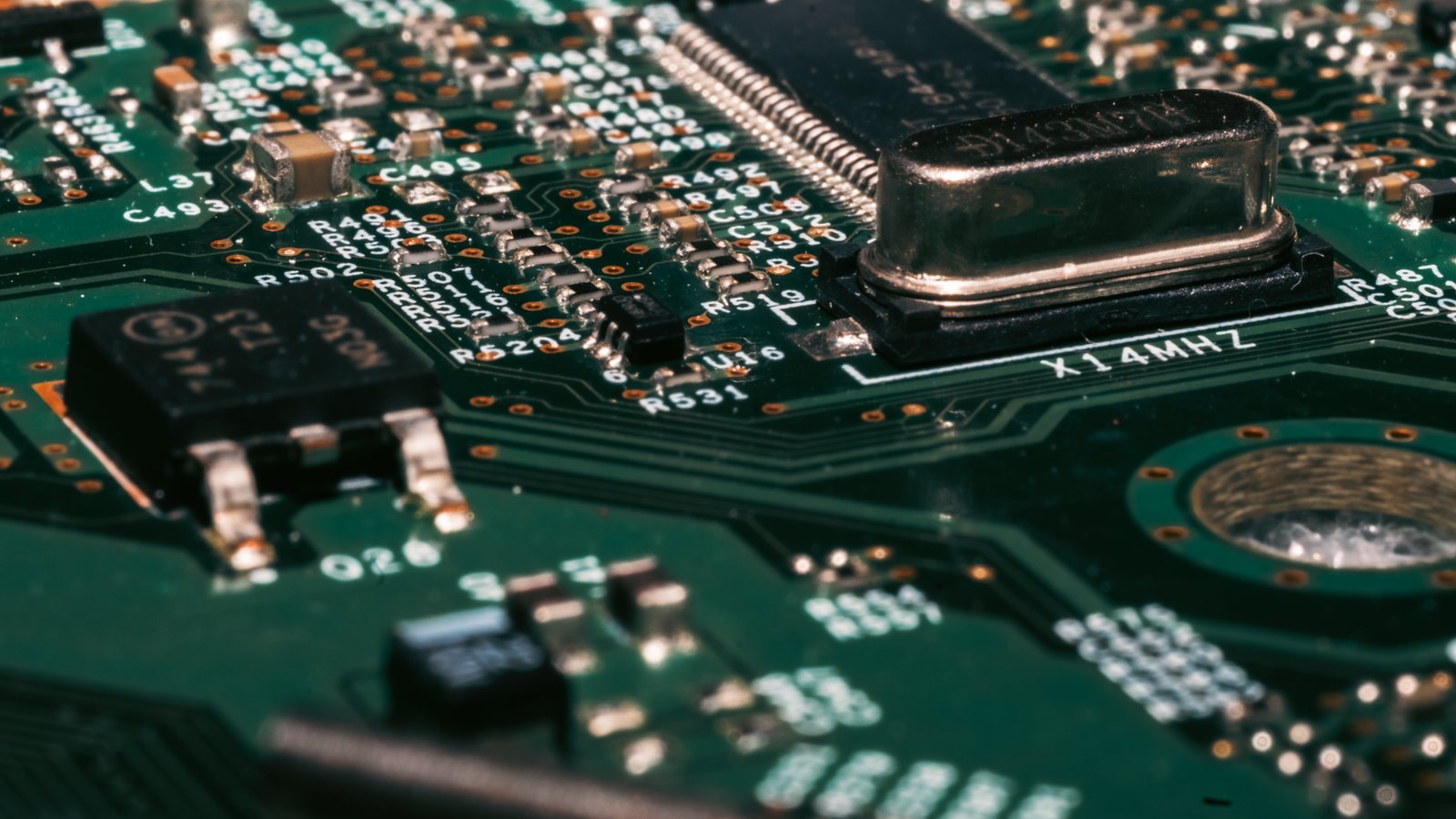
Consigned PCB assembly means the buyer buys and ships some or all of the components to the contract manufacturer (CM), which supplies labour, process and sometimes the bare PCB. In turnkey assembly the CM sources every part and bills components plus assembly. Consign the parts you already own, control or can secure better than your CM can, and let the CM buy the rest.
Key takeaways
- Consigned means you buy the components; the CM supplies labour and process.
- The real difference is who carries shortage risk, shipping risk, attrition and component compliance.
- Vendors disagree on which model is cheaper. Compare landed cost, not the assembly quote.
- Consign a scarce part only when you hold a supply advantage your CM does not.
- Partial turnkey is usually the pragmatic default.
What is consigned PCB assembly?
Consigned PCB assembly is a build model in which the customer supplies the components and the assembler handles placement, soldering, inspection and test. PCBCart puts it this way: "In consignment, you supply the components and pay only for fabrication and assembly labor; in turnkey, the supplier sources every component and bills parts plus assembly" (PCBCart). You will also see it called kitted assembly (PCBGOGO).
Settle one point early. Vendors are not consistent about whether the CM fabricates the bare board in a consigned build or expects it in your kit. EBest Circuit counts PCBs among the items the client supplies, while PCBCart's definition has the buyer paying the assembler for fabrication. There is no standard definition, so state it explicitly in your request for quotation.
How does consigned assembly work, step by step?
Consigned assembly moves procurement, and the risk that comes with it, from the CM to you. A typical flow looks like this:
- Freeze the BOM and split it by line item. Decide which lines you will supply and which, if any, the CM buys.
- Buy from authorised or traceable sources. Authenticate any part bought on the open market before it ships to the CM.
- Add attrition stock. Attrition "typically runs a small percentage per production run and needs to be pre-supplied" (PCBCart). MozPCB's guidance is "typically a few percent extra on small passives and several units on larger parts" (MozPCB). Agree the exact figure per part type with your CM.
- Pack, label and ship the kit. Include a kit list, use correct moisture and ESD packaging, and prepare the import paperwork for the assembly country.
- The CM receives, counts and inspects. "Consignment lead time starts only when a complete, verified kit arrives," and any missing line restarts the clock (MozPCB).
- The CM builds. You remain responsible for component compliance; the manufacturer is responsible for assembly to IPC-A-610 (EBest Circuit).
- Reconcile. Track usage against the BOM and agree what happens to surplus. PCBCart lists "the reconciliation work of tracking exact quantities against BOM usage" as a buyer burden.
Consigned vs turnkey vs partial turnkey: what is the difference?
The difference between consigned and turnkey PCB assembly is who buys the parts, and therefore who owns shortage, logistics, attrition and quality risk. Partial turnkey splits that ownership line by line.
| Factor | Turnkey | Partial turnkey | Consigned |
|---|---|---|---|
| Who buys components | CM sources boards, components and materials | Split by line item | Buyer |
| Shortage risk | CM | Split by line item | Buyer |
| Component compliance | CM | CM for its lines; buyer for supplied lines | Buyer for components; CM for workmanship |
| Inbound logistics | CM | Buyer ships its lines | Buyer ships everything |
| Attrition allowance | Handled by CM | Buyer pre-supplies for consigned lines | Buyer pre-supplies |
| Typical fit | Standard designs, startups, NPI, lean teams | Critical or custom parts consigned, passives bought by CM | Owned stock, proprietary parts, large buyers with strong purchasing |
| Watch for | Component markup | Possible itemisation fee | Hidden overhead |
Compiled from MozPCB, PCBCart and EBest Circuit.
The vendors disagree on cost:
- PCBCart says "Turnkey is cheaper for most buyers".
- PCBGOGO calls turnkey more cost-effective for the majority of projects.
- MozPCB limits that to most small teams and NPI builds.
- EBest says consigned is almost always more economical if you have reliable suppliers.
All four sell assembly services, so none is neutral.
Should you consign scarce parts such as memory?
Consign a scarce part only if you can secure it on better terms than your CM can. This is our reading rather than a documented rule. When a part is on allocation, the buyer holding the contract or the supplier relationship has the advantage, and a CM buying for you may not. If that buyer is you, consigning that line keeps the supply you secured tied to your build.
The counter-argument matters. PCBCart notes that for high-mix, low-volume work, professional buyers consolidating orders across many customers "can often navigate component shortages more effectively than an individual firm" (PCBCart). That supports letting the CM buy non-scarce parts even when you consign the scarce ones.
Two further points apply. Regulated customers may need control of component origin: PCBGOGO notes that medical and aerospace customers may require "100% control over the component origin and specific manufacturer batches" (PCBGOGO). And scarce parts bought outside authorised channels carry the highest counterfeit risk, which under consignment is yours.
Lead times and prices for scarce parts move quickly, so check current quotes before you plan a build around any headline figure. Our guide to electronic component lead times and prices covers how to approach that.
What does consigned assembly really cost beyond the component price?
Consigned assembly costs more than the parts invoice, because you take on logistics, inventory and failure costs the CM would otherwise cover in its markup. MozPCB notes that "Consignment looks cheaper on paper because the assembly quote contains no component markup." It adds that "For teams without an established purchasing operation, these costs routinely exceed a turnkey markup" (MozPCB).
Published figures are sparse and come from vendors. EBest, for example, says urgent shipping or rework "can add 15-30%" to total costs, while also claiming consigned assembly can save 3–7 days of sourcing time (EBest Circuit). Neither figure comes with a method. Get each of these items quoted or estimated for your own build:
- Attrition and overage: extra parts you buy and may not get back.
- Kitting, receiving and handling fees at the CM, including any itemisation fee for hybrid quotes (PCBCart).
- Inbound freight and transit insurance to the assembly country.
- Duties, brokerage and import paperwork for parts entering the assembly country.
- Inventory carrying cost of stock you hold ahead of builds.
- Internal procurement labour for tracking every supplied line, each with its own lead time, packaging and attrition margin.
- Line-down risk: one late or rejected part stops the whole build.
Put all of these into a single landed-cost comparison. Our worked landed cost example for electronics shows how to structure it.
What are the risks of consigning components?
The main risks are counterfeit parts, unclear liability when a supplied part fails, unclear title and insurance while stock sits at the CM, and customs friction.
- Counterfeits and damage. Under consignment "you bear supply chain risks (shortages, counterfeits, shipping damage)" (EBest Circuit).
- Liability. PCBCart advises asking "specifically how liability is split when a defect could trace back to a part you supplied versus the assembly process itself" (PCBCart). Under consignment, component issues are generally treated as the buyer's responsibility (PCBGOGO). Liability still depends on the quote and quality agreement, not on the label.
- Title, risk of loss and insurance. In our view there is no standard answer to who owns, insures and carries the risk for your stock in a CM's warehouse. Write it into the contract and have a lawyer review it.
- Customs. EBest notes customs delays and that non-compliant components risk rejection at customs. Customs treatment of components shipped in for assembly differs by country. Confirm it with the relevant customs authority or a licensed broker before the first shipment, rather than relying on the CM's assurance.
- Confidentiality. For NDA-protected or proprietary parts, ask how the CM handles consigned parts specifically (PCBCart).
When should you consign, and when should you let the CM buy?
Consign when you have a clear advantage in owning, controlling or securing a part; otherwise let the CM buy. Use this checklist.
Consign (or use partial turnkey) when:
- [ ] You already hold excess inventory from a prior run (PCBCart).
- [ ] A part is proprietary (PCBCart).
- [ ] Parts are scarce or pre-programmed, and you hold the allocation or supply contract.
- [ ] Regulated customers require control of component origin and batches (PCBGOGO).
- [ ] You have real purchasing infrastructure, not one engineer with a spreadsheet (MozPCB).
Let the CM buy (turnkey) when:
- [ ] The design uses standard parts with no unusual sourcing needs.
- [ ] You are a lean team on a prototype or NPI build (MozPCB).
- [ ] Your BOM is high-mix and low-volume, where consolidated CM buying helps most (PCBCart).
The model can change over time. Some buyers consign a small prototype batch, then shift to turnkey once the design is confirmed (PCBCart). Our guide to scaling hardware production looks at that transition as part of a wider ramp.
Your harder problem may be reducing BOM cost or finding second sources rather than running the kit yourself. If so, Hephaestus Technology supports BOM cost-down, second sourcing and prototype-to-volume manufacturing through a partner network in China and South and Southeast Asia; see how we work at the build stage.
How do you write consignment terms into your contract manufacturing agreement?
Write consignment terms as specific, testable obligations rather than general statements. The sources offer pointers, not model clauses, so treat this list as our own starting point for legal review:
- Scope by line item: which parts are consigned, which the CM buys, and any itemisation fee.
- Kit acceptance: what counts as a complete, verified kit, the inspection the CM performs and its rights to reject parts.
- Attrition: a fixed allowance per part type and the reconciliation method.
- Storage: handling of moisture- and ESD-sensitive parts, and storage conditions.
- Liability split: defects traced to consigned parts versus assembly workmanship.
- Title, risk of loss and insurance while your stock is at the CM.
- Surplus and disposition: return of unused stock and treatment of inventory if you switch models.
- Confidentiality for consigned parts, separate from design files.
Our contract manufacturing agreement checklist for electronics covers the wider agreement these clauses sit in.
Frequently asked questions
Is turnkey PCB assembly more expensive than consigned?
Not necessarily. Turnkey includes a component markup, but consigned shifts freight, attrition, inventory, inspection and shortage costs to you. Some vendors, such as PCBCart and PCBGOGO, say turnkey is cheaper for most buyers, while others, such as MozPCB and EBest, say it depends on your purchasing capability. Compare landed cost rather than the assembly quote.
Can I mix consigned and turnkey on one board?
Yes. Partial turnkey splits the BOM by line item, typically with critical, custom or scarce parts consigned and passives bought by the CM. Ask whether the CM charges an itemisation fee for hybrid quotes.
Do I still need to worry about lead times if I consign?
Yes, for every part you supply. The build only starts when a complete, verified kit arrives, and a missing line restarts the clock. You are trading the CM's procurement timeline for your own.
Who is liable if a consigned component fails?
It depends on your contract. Liability often changes under consignment, and component issues are generally treated as the buyer's responsibility. The quote and quality agreement decide the split, so define component defects versus workmanship defects before the first build.
Should I consign scarce parts such as memory?
Consider it if you hold allocation or contract volume your CM cannot match. Otherwise a CM buying across many customers may be better placed to handle shortages. Check current lead times before planning a build, and authenticate any part bought outside authorised channels before it reaches the CM.
If you want a second opinion on whether to consign, go partial turnkey or hand the BOM to your CM, book a free 30-minute call.
Cover photo by U.Lucas Dubé-Cantin on Pexels.