
How to build an IoT product: from prototype to production
Hephaestus Technology7 min read
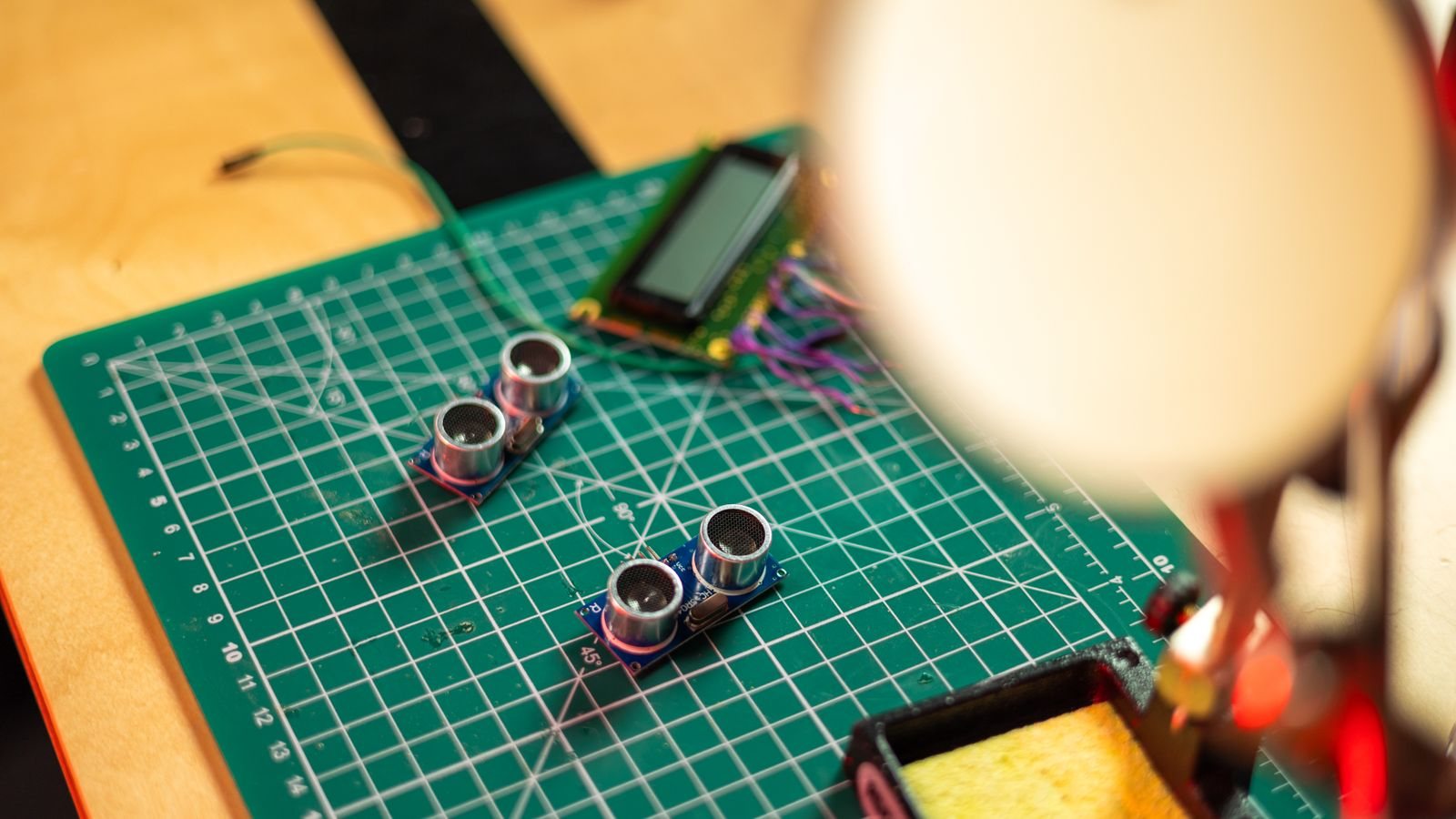
To build an IoT product, you move through six stages: define the job the device does and the data it produces, prove the idea on development kits, design custom electronics and firmware, build an engineering batch and test it, certify it for the markets you sell into, and only then scale manufacturing. Most delays come from skipping stages, not from the technology itself. In the EU, regulation (CE marking, radio cybersecurity rules and the Data Act) now has to be designed in from the first prototype, not bolted on at the end.
Key takeaways
- Prove the use case on off-the-shelf development kits before you pay for a custom circuit board.
- Choose connectivity, power budget and cloud architecture together, because each one constrains the others.
- In the EU, design for CE marking, the radio cybersecurity requirements and Data Act user access from the first schematic.
- Plan at least one engineering build of 10 to 50 units before any production order, and expect to revise the board.
- Write down the decisions at each stage so a manufacturer or a new engineer can pick up the work.
What does "building an IoT product" actually involve?
An IoT product is a physical device that senses or controls something, sends data over a network, and is managed through software in the cloud or on a phone. Building one means delivering four things that must work together: hardware (sensors, processor, radio, power), embedded firmware, a backend that receives and stores data, and a user-facing app or dashboard. The hardest part is usually not any single element but the interfaces between them, such as how a device recovers after losing its network for a week.
Before writing any code, answer three questions in one page: what the device measures or does, how often it needs to talk to the network, and how it is powered. Those answers decide almost every later choice.
How to build an IoT product: the step-by-step process
The process below follows the order most hardware teams use. Each step ends with a decision you should be able to write down.
- Define the requirements. List the measurements, accuracy, update frequency, battery life target, operating environment (indoor, outdoor, temperature range, water ingress) and target unit cost. Decide which markets you will sell into first, because that sets your certification path.
- Build a proof of concept on development kits. Use vendor evaluation boards and breakout sensors to show the core function works. This stage should take weeks, not months, and cost little. The goal is a yes or no on the core function, not a polished device.
- Choose connectivity and architecture. Pick the radio (Wi-Fi, Bluetooth LE, LTE-M, NB-IoT, LoRaWAN) based on range, data volume and power. Our IoT connectivity comparison covers the trade-offs. Cellular IoT is now widely available: the GSMA counts 129 LTE-M and 140 NB-IoT commercial networks worldwide (last updated November 2025).
- Design the custom electronics. Draw the schematic, select components with at least two sources where possible, and lay out the printed circuit board (PCB). Industry standards from IPC define design rules: IPC's 2026 standards guidance maps design to IPC-2221 and IPC-2222, land patterns to IPC-7351 and assembly acceptability to IPC-A-610.
- Write production firmware. Move from demo code to firmware with a proper bootloader, secure over-the-air updates, watchdogs, logging and power management. Budget more time here than you expect.
- Build the backend and app. Device provisioning, identity, data storage, alerts and user accounts. Keep the device-to-cloud protocol simple and versioned.
- Run an engineering build. Order 10 to 50 assembled boards, put them in real enclosures and test them in real conditions for weeks. The step from design to a fabricated board is covered in our guide to PCB design to manufacturing.
- Certify. Run pre-compliance tests, then formal testing for the markets you sell into.
- Pilot production and scale. Run a small pilot batch with your chosen manufacturer, fix yield problems, then increase volume.
What EU rules shape an IoT product design?
Three sets of EU rules affect almost every connected device sold in Ireland and the rest of the EU, and all three are cheaper to handle at design stage than after launch.
CE marking. Before a product reaches the market, the manufacturer must identify the applicable directives and harmonised standards, test the product, prepare technical documentation and sign an EU declaration of conformity, according to the European Commission's CE marking guidance. For anything with a radio, the Radio Equipment Directive applies.
Radio cybersecurity. Delegated Regulation (EU) 2022/30 activates cybersecurity, privacy and anti-fraud essential requirements for internet-connected radio equipment. Its application date was moved to 1 August 2025. The broader Cyber Resilience Act follows: the Commission states its reporting obligations apply from 11 September 2026 and its main obligations from 11 December 2027. Our Cyber Resilience Act checklist for IoT and hardware makers covers what that means in practice.
The Data Act. Regulation (EU) 2023/2854 applies from 12 September 2025, and its Article 3(1) design obligation applies to connected products placed on the market after 12 September 2026. Products must be designed so users can access the data they generate, easily, securely and free of charge. Micro and small enterprises are exempt from these Chapter II obligations under Article 7, but the exemption is lost if they have larger partner or linked enterprises or make products as a subcontractor.
What should you test before you certify?
Test the things that cause field failures and certification failures, in that order.
- Power: measure real current draw in each mode and calculate battery life from measurements, not datasheet figures.
- Radio performance: check range and reconnection behaviour in the worst realistic location, such as a basement or a metal cabinet.
- Environmental: temperature, humidity and drop tests that match where the device will live.
- Firmware robustness: power cuts during updates, network loss for days, full storage.
- EMC and radio pre-compliance: a day at a pre-compliance lab before formal testing often saves a repeat test.
How long does it take to go from prototype to production?
There is no official benchmark, and timelines vary widely with complexity. The main variables are how many board revisions you need, component lead times and how quickly certification testing can be booked. A simple sensor built on a pre-certified radio module usually moves faster than a product with a custom antenna design, because the module's radio testing can support part of your own assessment. Plan for at least two hardware revisions and treat any plan with only one as optimistic.
IoT product checklist you can use today
Copy this list into your project tracker and work down it.
- [ ] One-page requirements: function, accuracy, update rate, power source, environment, target cost
- [ ] Target markets listed, with the applicable EU directives identified
- [ ] Proof of concept working on development kits
- [ ] Connectivity chosen and coverage checked where the device will be used
- [ ] Power budget calculated from measured current
- [ ] Component shortlist with second sources and lifecycle status checked
- [ ] Schematic and PCB reviewed against the fabricator's design rules
- [ ] Secure boot and over-the-air update path designed
- [ ] Data Act access route decided (direct on device, app or API) or the small-enterprise exemption confirmed
- [ ] Engineering build of 10 to 50 units tested in real conditions
- [ ] Pre-compliance testing completed
- [ ] Technical file and EU declaration of conformity drafted
- [ ] Manufacturer selected and pilot batch planned
Frequently asked questions
Do I need a custom PCB for my first IoT prototype?
No. Most proofs of concept are built on vendor development kits and breakout boards. A custom PCB becomes worth it once the core function is proven and you need the right size, power consumption or cost for real-world testing.
Can I use a pre-certified radio module to save time?
Yes, and many startups do. A pre-certified module reduces radio design risk and can support part of your conformity assessment. You still need to assess the finished product, including EMC, safety and the radio cybersecurity requirements, because the module certificate does not cover your whole device.
Does the EU Data Act apply to my small hardware startup?
Possibly not to its access-by-design duties. Article 7 of the Data Act exempts products made or designed by micro and small enterprises from the Chapter II obligations, but the exemption does not apply if you have larger partner or linked enterprises or manufacture as a subcontractor. Check your status with an adviser before relying on it.
What is the most common mistake when building an IoT product?
Moving to production with a single tested board revision. Problems with power, antenna performance or assembly yield usually appear only once tens of units are built and used in real conditions, so budget for at least one more revision than you plan.
Which connectivity option is best for a battery-powered sensor?
It depends on range, data volume and coverage. LTE-M, NB-IoT and LoRaWAN are designed for low-power devices that send small amounts of data, while Wi-Fi suits mains-powered devices in buildings. Check real coverage at your deployment sites before committing.
Planning a connected product and want a second opinion on your plan? Book a free 30-minute call with our product team.
Cover photo by ThisIsEngineering on Pexels.